Last updated
Mar 3, 2026
Last updated
Mar 3, 2026




Understanding the past is crucial to winning in the present.
Imagine you’re in charge of your company’s market and competitive intelligence (M&CI) program, and you notice that a key competitor has slashed their prices by 20%. As panic spreads across your sales and strategy teams, you wonder whether your organization should follow suit or if this is a temporary move or part of a bigger strategy.
If you had access to two years of competitor pricing trends, you might notice a pattern conveying that every March, this competitor lowers prices to gain market share. They do this before a major industry conference and raise them back within three months.
With this insight, your response changes. Instead of matching their price cut and hurting your margins, you focus on communicating long-term value to customers, knowing the competitor’s move is just a short-term play. That’s the power of historical data in M&CI.
Why It’s Not Enough to Track Only Real-time Updates in Market and Competitive intelligence?
In the world of Market and Competitive Intelligence (M&CI), real-time data is undeniably valuable. But relying exclusively on it limits your ability to make informed, strategic decisions.
Understanding the past, such as the history of your competitors, your market, and your industry, is essential for anticipating future trends and identifying opportunities before they fully emerge. Let’s break down the limitations of relying solely on real-time intelligence:
1. Lack of Trend Analysis
Real-time intelligence provides you with a snapshot of the present moment, but it doesn’t reveal how trends have evolved. The absence of a long-term perspective means you might miss out on understanding whether a competitor’s move is an anomaly or part of a recurring cycle. Competitive analysis helps bridge this gap by examining historical data, identifying patterns, and predicting future strategies.
For example, without analyzing past pricing strategies, a company might overreact to a temporary price cut by a competitor without realizing that it’s an annual event meant to gain short-term market share.
2. Missed Early Warning Signals
Historical data plays a critical role in identifying shifts in customer preferences, changes in competitor behavior, and emerging market conditions that are building up over time.
Real-time data often focuses on immediate reactions, leaving you blind to subtle, gradual changes that could signal a larger shift. Without historical context, you might not notice the early stages of a market disruption, leaving you unprepared when it arrives.
3. Inability to Benchmark Against Competitor Performance
Tracking real-time data provides you with insights into your competitors’ current actions, but it doesn’t help you understand whether these actions are effective or not. Benchmarking against past performance is crucial for evaluating the success or failure of a competitor’s strategy.
For example, if a competitor is heavily promoting a new product, it’s essential to know if that product launch mirrors their success from last year or if it’s part of an ongoing long-term strategy.
4. Short-Term Decision-Making
When businesses rely only on real-time data, they often act reactively instead of strategically. Real-time data can push businesses to make quick, impulsive decisions, but these decisions might not align with long-term goals or market conditions.
By relying solely on short-term data, companies risk making moves that hurt their margins or positioning in the long run.
Therefore, real-time updates are a necessary part of M&CI, but without historical data to provide context, they fall short. Historical data is what transforms reactive insights into proactive strategies.
The Importance of Historical Data in M&CI
 Incorporating historical data into M&CI can unlock deeper insights and lead to more strategic, forward-looking decisions. Below are key reasons why historical data is critical to M&CI:
1. Identify Long-Term Trends & Patterns
Historical data offers the context needed to identify long-term trends that might otherwise go unnoticed. For example, competitor pricing strategies or product launches are often part of a predictable seasonal cycle. Without analyzing historical data, businesses would be left to react to price changes or new product introductions, unaware that these are standard practices within a competitor’s long-term strategy.
2. Understand Competitor Strategies & Market Movements
Historical data gives businesses a deeper understanding of their competitors’ strategic plays. By tracking their past actions, you can understand the motivation behind these moves and predict whether they are likely to be part of a larger trend or just a temporary tactic. Analyzing past product launches, pricing changes, and marketing strategies provides valuable insights into what worked and what didn’t for your competitors.
For example, let’s consider Apple’s approach to product launches. Over the years, Apple has consistently followed a product refresh cycle. Historical data on Apple’s product announcements helps competitors, such as Samsung, understand when Apple is likely to release new products. By preparing for these releases and adjusting marketing strategies ahead of time, competitors can better position themselves to capture market share when these products are launched.
3. Detect Early Warning Signals Before Market Disruptions
Markets don’t experience disruptions overnight; they develop over time. Without historical data, you might miss the early signs of these disruptions. For example, regulatory changes or shifts in consumer sentiment often take time to manifest, and spotting them early requires monitoring historical trends.
Example: In the healthcare industry, many pharmaceutical companies track historical regulatory trends. For instance, a shift in regulations regarding drug approvals may develop slowly, with signs in the form of proposed bills, industry debates, or small-scale changes that don’t immediately grab attention. However, by analyzing historical regulatory data, M&CI teams can spot these early signs and prepare for potential disruptions.
4. Improve Forecasting & Reduce Decision-Making Risks
The best way to forecast the future is by studying the past. By analyzing historical data, businesses can forecast market shifts, anticipate competitor moves, and identify potential risks before they become critical. This reduces the likelihood of poor decision-making based on isolated real-time events and provides a more informed foundation for future planning.
How Contify Empowers Businesses to Access a Mix of Historical and Current Data
The key to successful M&CI lies in combining the context of historical data with the immediacy of real-time insights. With two years of pre-configured historical data, Contify provides businesses with a powerful platform that combines both to help teams make better, more strategic decisions.
Historical Data for Contextual Intelligence
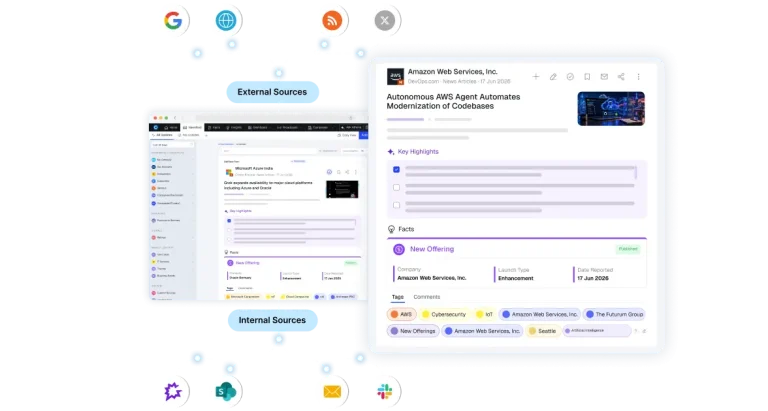
Contify aggregates two years of historical data from multiple sources, allowing M&CI professionals to track long-term trends in competitor activities, market shifts, customer sentiment, and industry changes. This historical context helps teams recognize emerging patterns, benchmark past actions, and forecast future developments.
Real-Time Alerts & AI-Driven Insights
In addition to historical data, Contify’s alerts provide the latest market updates and competitor actions. With its AI-driven intelligence, users can automatically analyze this data to spot important patterns, identify early warning signs, and take action based on historical context. This blend of historical and real-time intelligence ensures that businesses can make data-backed decisions quickly and confidently.
Custom Dashboards & Reporting
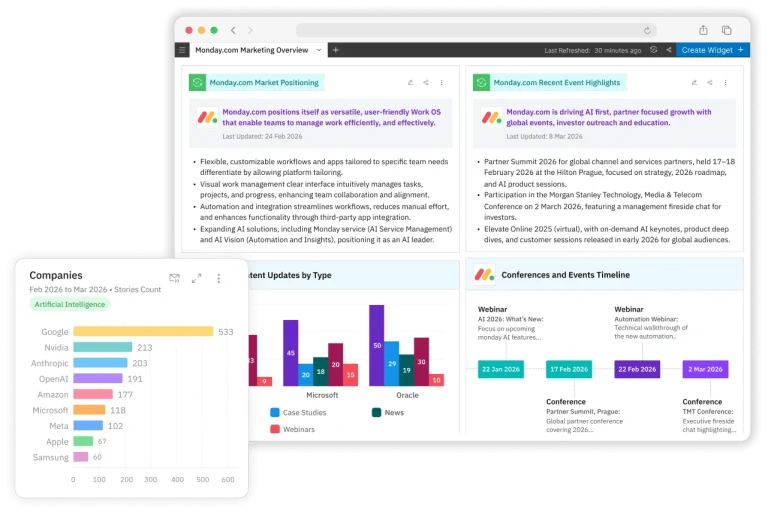
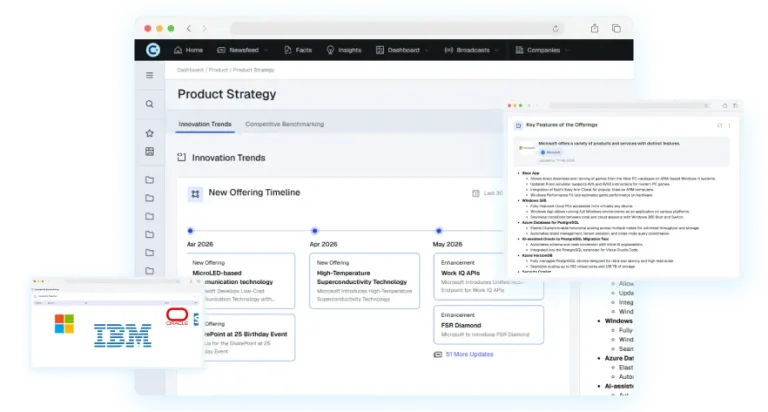
Contify allows users to create customized dashboards that track both historical and real-time data. These dashboards enable teams to view competitor performance trends over time, compare market shifts, and track critical metrics all in one place. By using Contify’s Market and Competitive Intelligence Platform, businesses gain a comprehensive understanding of their market landscape, allowing them to stay one step ahead of their competitors.
Conclusion: Empower Your Business with Contify’s Comprehensive Data Insights
Historical data provides the context and depth necessary to make proactive, data-driven decisions, while real-time updates ensure you never miss a crucial development. This is necessary to stay competitive in saturated markets.
Contify allows users to create customized, role-specific dashboards that can be populated from both historical and real-time data. These dashboards enable teams to view competitor performance trends over time, compare market shifts, and track critical business events all in one place.
With powerful AI-driven insights, custom dashboards, and seamless reporting, Contify ensures that your M&CI team has everything it needs to make smarter, more strategic decisions.
Explore Contify’s platform today and discover how combining historical data with real-time intelligence can give your business the competitive edge it needs to succeed.
Sign up for a 7-day free trial.